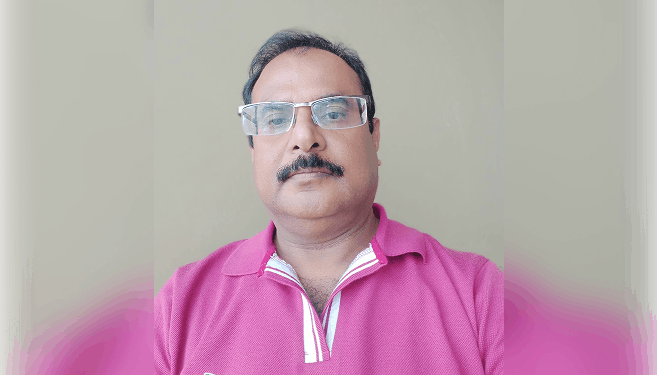
Mr Bikash Jishen Dhurgabarsad’s Master of Architecture research explored how architectural design can respond to water insecurity in South Africa, focusing particularly on Durban.
His thesis, titled: ‘Architecture as a Response to Water [In]security: A Proposed Seawater Desalination Plant in Durban’, reconceptualises water infrastructure as more than a technical facility, by incorporating public, educational and community-oriented spaces designed to educate, connect and empower communities.
A fascination with the craftsmanship and attention to detail evident in ancient buildings and monuments inspired Dhurgabarsad to study architecture, allowing him to pursue a field that shapes how people experience and connect with places.
After completing his undergraduate and honours studies at the Durban University of Technology and gaining professional experience, he enrolled at the University of KwaZulu-Natal (UKZN), drawn by the expertise of his supervisor, Dr Viloshin Govender. He credited Govender with providing significant academic and professional guidance, reassurance and wisdom. He also valued UKZN’s collaborative Architecture studio culture and the resources of the Barrie Biermann Architectural Library.
Returning to academia from a professional environment was challenging, particularly adjusting to the standards and expectations of a new university, but regular engagement with his supervisor and classmates helped Dhurgabarsad build confidence and expand his skills.
His research focused on alternative water resources, such as seawater, as a strategy to address water scarcity, climate change, and ageing infrastructure.
The proposed desalination plant combines essential infrastructure with educational and community spaces to raise awareness of water scarcity and encourage greater public engagement with water resources.
The research demonstrates the role architects can play in addressing environmental and social challenges while thoughtfully integrating essential infrastructure into urban environments and creating meaningful experiences for communities.
Govender’s guidance contributed to Dhurgabarsad receiving a Corobrik Student Architecture Award for the design component of his research. He was also awarded the Brian Bernstein Memorial Scholarship.
Now based in Johannesburg as a Candidate Architect at AECOM, Dhurgabarsad is applying and expanding his knowledge through local and international projects while collaborating with diverse teams. He plans to do a PhD and eventually return to academia.
“Architecture has the potential to contribute not only to the provision of essential services but also to more resilient and equitable urban environments, while strengthening the connection between people, place and essential infrastructure,” said Dhurgabarsad.
He was particularly struck by the resilience of communities in the face of water insecurity, and how they found innovative ways to access water despite natural disasters, flooding, and infrastructural damage. He was also inspired by water-recycling initiatives in the iLembe District, which demonstrated how alternative water resources are already being explored in KwaZulu-Natal.
“These insights broadened my understanding of water insecurity beyond simply being an issue of water supply and highlighted the important role that awareness, innovation and community resilience play in addressing the challenge,” he said.
Dhurgabarsad credited his faith and prayer routine for keeping him grounded, and thanked his parents for their sacrifices, Govender for his support, and his classmates, particularly Ms Erin Naidoo, for believing in him.
Words: Christine Cuénod
Photograph: Sethu Dlamini