A hands-on, full-day workshop on the responsible and effective use of AI tools in postgraduate research, writing and supervision.
At UKZN’s School of Engineering, you will find world-class engineers and researchers who work to provide solutions to problems that are prevalent in the community. By harnessing appropriate technology and processes in its research projects, the school is meeting the needs of society.
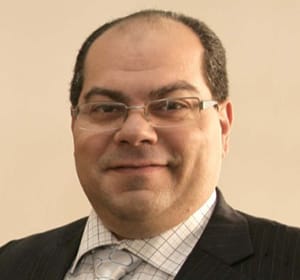
Professor Mostafa is an experienced academic with a demonstrated history (more than 20 years) of working in the higher education. He has multinational experience, starting his academic career in Egypt before moving to the UK and then to South Africa. He is skilled in Pavement, Highways, Transportation, and Geotechnical Engineering.
His research focuses on “sustainable roads”. He is interested in applications related to environmental aspects and characterisation of flexible pavement materials, with special reference to bituminous materials. Environmental aspects research includes: incorporation of recycled and/or waste materials in civil engineering applications with special interest in pavement. He has published more than 60 articles in journals and conference proceedings.
The South African Research Chairs Initiative (SARChI) was established in 2006 by the Department of Science and Technology (DST) and the National Research Foundation (NRF).
It is designed to attract and retain excellence in research and innovation at South African public universities through the establishment of Research Chairs at public universities in South Africa with a long-term investment trajectory of up to fifteen years. There are the SARChI research chairs in our College.
There are two SARChI research chairs in the School of Engineering.



The Aerospace Systems Research Institute (ASRI) is located within the University of KwaZulu-Natal’s School of Engineering. ASRI was formed in 2009 as a research group (ASReG) by Prof Jean Pitot and Prof Michael Brooks.

A transdisciplinary research and development hub in Africa that produces next-generation solutions for global water and sanitation challenges.
Promotes research and innovation in power engineering, renewable energy, smart grids, and sustainable energy systems, supporting the development of reliable and efficient energy solutions through collaboration with industry and academia.
The Thermodynamics Research Unit is located in the School of Engineering at the University of KwaZulu Natal (on the Howard College Campus). This research group has some 30 years of expertise in the equipment design of apparatus for phase equilibria measurements.
Conducting research into clean coal technologies and high-temperature engineering processes to improve energy efficiency, reduce emissions, and support sustainable industrial and power generation applications.
A dedicated research laboratory focused on mechatronics, robotics, automation and intelligent systems.
EFML is a research laboratory; the Coastal Engineering Group is the associated research group.
Advances research in electrical power systems, renewable energy integration, smart grids, and power system reliability to develop innovative and sustainable energy solutions.
Advancing research in sustainable transportation, smart mobility, and transport infrastructure to create safer, more efficient, and environmentally sustainable transport systems.
Advances research in reactor engineering, process design, and reaction technologies to develop efficient, sustainable, and innovative solutions for the chemical and energy industries.
Advances research in sustainable engineering, renewable energy, water resources, and food systems to develop innovative solutions for global resource and environmental challenges.
Driving innovation in robotics, automation, and mechatronic systems through cutting-edge research in intelligent engineering and advanced manufacturing technologies.
Advancing research in biomass conversion and biorefinery technologies to produce sustainable fuels, chemicals, and energy from renewable resources.
Focuses on coastal processes, erosion control, wave dynamics, and resilient coastal infrastructure to support sustainable shoreline management.
Researches the behaviour of granular and particulate systems, focusing on particle flow, mixing, and processing for applications in mining, energy, pharmaceuticals, and industrial engineering.
Conducts research in structural analysis, computational modelling, and engineering design to improve the safety, efficiency, and resilience of infrastructure systems.
Advancing research in biomass conversion and biorefinery technologies to produce sustainable fuels, chemicals, and energy from renewable resources.
Conducts research in wireless communications, radio access technologies, and rural connectivity, developing innovative solutions that improve digital inclusion, broadband access, and communication infrastructure for underserved communities.
At this premium event, awards are conferred on our top researchers and on donors who provide financial support to the School. This event has been part of the Engineering calendar at UKZN for approximately 10 years. The event has played an important role in maintaining sustainable links with corporate donors as well affirming the research achievements of our academic colleagues and students.
Research Space is an institutional repository of the University’s publications. It was developed to increase the visibility, availability and impact of its research output. Take a look at publications from the disciplines within the School of Engineering.
Underdevelopment


