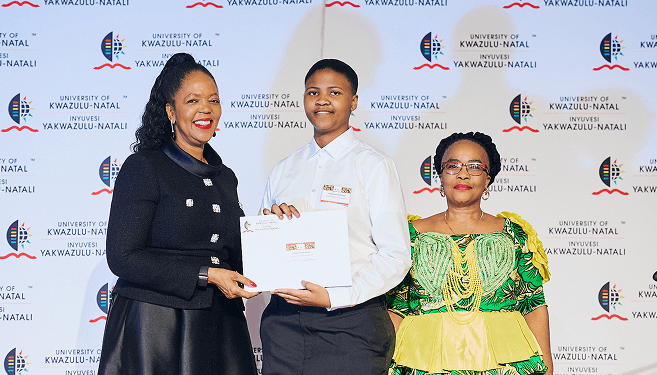
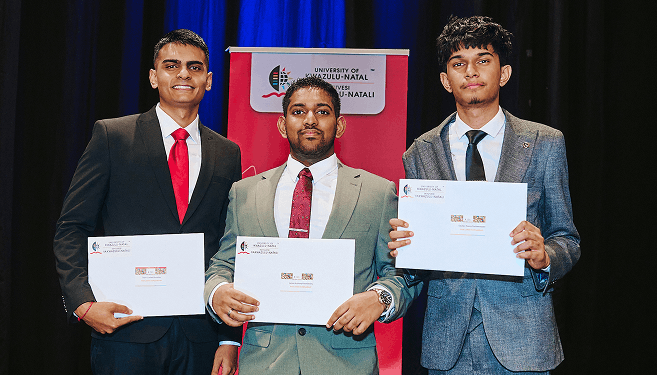
Chemical Engineer Mr Jonathan Byamungu graduated with a Master of Science (MSc) in Engineering from the University of KwaZulu-Natal (UKZN).
Supervised by Professor David Lokhat, Byamungu, who is an international student from the Democratic Republic of the Congo, completed both his undergraduate and postgraduate Engineering degrees at UKZN, saying his positive early academic experiences played a decisive role in his decision to study further at the Institution.
“What motivated me to do my MSc through UKZN was the experience I had during my undergraduate years,” Byamungu explained. “I had the opportunity at an early stage to interact with some of the projects Professor Lokhat was conducting with the then Reactor Technology Research Group, on how to extract valuable metals from electric waste.’’
“This experience allowed me to start thinking more about how I could use my acquired engineering skills to explore this concept of waste valorisation for environmental remediation further,” he said. “It pushed me to apply this thinking to different problems, including what eventually became my MSc research topic.”
For his master’s research, titled ‘Desulphurization of Bioethanol Using Copper-loaded Carbon Foam’, Byamungu investigated innovative ways to address pollution in fuel sources. “My research explored how to remove toxic sulphur compounds from fuels by exploiting the properties of very small particles of copper, called nanoparticles,” he said.
Byamungu’s work is particularly relevant as countries around the world explore cleaner and more sustainable energy sources. Reducing harmful emissions from fuels remains an important step toward protecting the environment and public health. “We need to explore alternative renewable sources of fuel that reduce the harmful emissions of traditional fossil fuels such as coal or crude oil,” he said.
“My interest in this area was motivated by the rising industrialisation of many African nations,” explained Byamungu. “As more of these nations consume these fuels to accommodate their increasing populations, we need to make sure we learn from the mistakes of the first industrial nations and do better, especially when it comes to environmental pollution.
“I think the research I conducted has potential, tangible industrial applications to make a real difference in the quality of renewable fuels we produce and use, which then has further ramifications on our quality of life as a whole,” he said.
Byamungu’s academic journey is far from over. He plans to continue investigating the potential of copper and other nanoparticles in environmental applications. “Turns out, those small nanoparticles have more and more interesting applications,” he said. “I plan to explore using them, as nanofluids, to remove small plastic particles (microplastics) from water as part of a PhD at UKZN.”
He is particularly excited about the potential impact this research could have on communities across Africa. “I will be applying this process to investigate how it could positively affect the lives of communities in some previously disadvantaged regions of the continent,” he said.
Byamungu thanked those who supported him along the way, particularly his family and the UKZN academic community. “My parents played a big role in shaping the person I am today,” he said. “From a young age, they nurtured my sense of curiosity, which then morphed into a keen interest in research as I was formed at UKZN.”
Outside of academia, Byamungu enjoys working on DIY projects and volunteering in his community. He sometimes assists at his local church, helping to feed unhoused people or serving as an usher.
Looking ahead, he believes empowering young people to experiment, explore ideas and learn from mistakes will be key to Africa’s future.
“The lessons we receive along the way shape who we become,” he added.
Words: Sally Frost
Photograph: Sethu Dlamini